
Trucking Industry News - Page 6
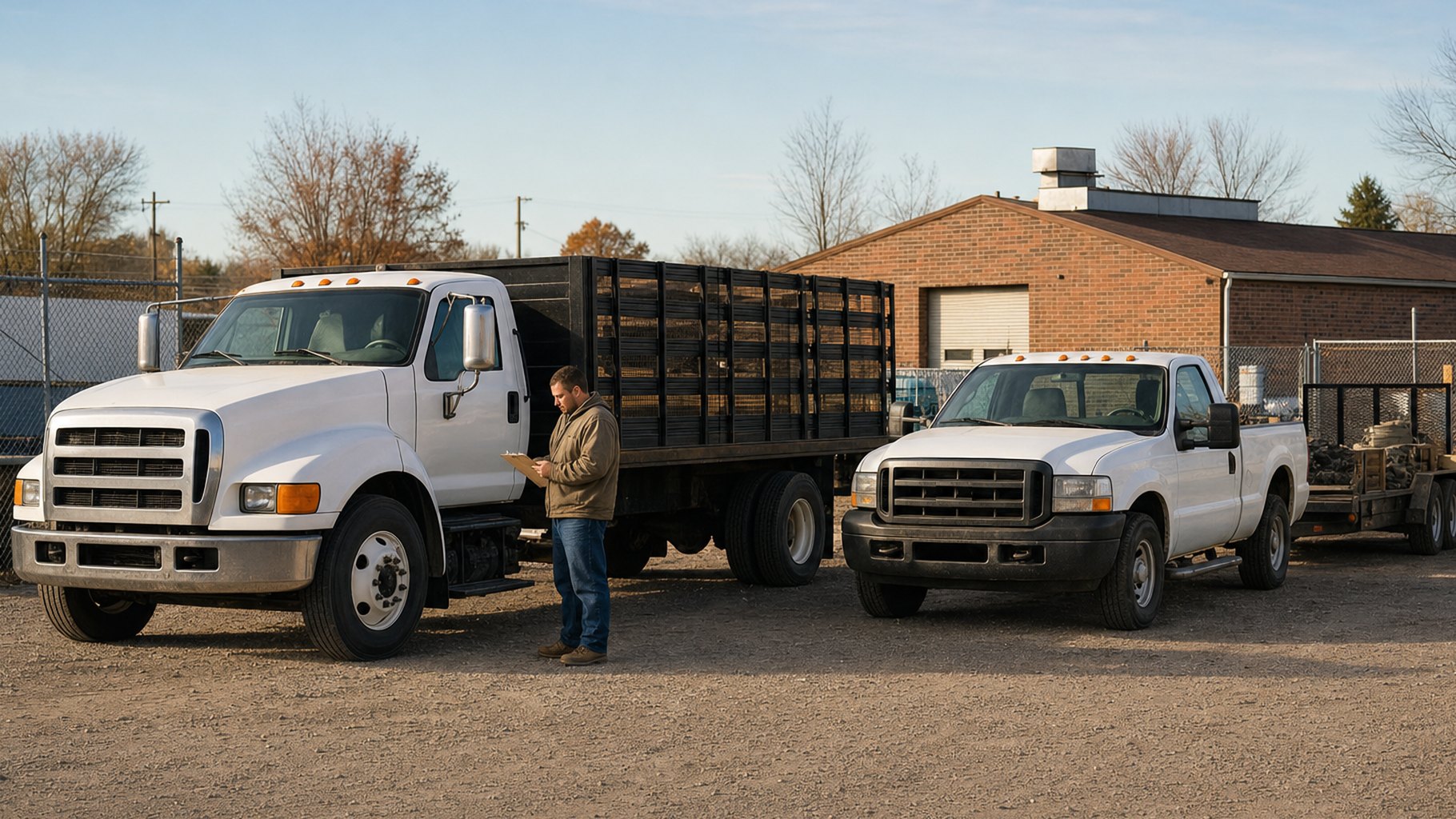
Do You Need a USDOT Number in New Jersey? Intrastate Rules for NJ Trucks
Yes, in most cases. If your business runs trucks of 10,001 pounds or more on New Jersey roads, New Jersey requires a USDOT number even if the trucks never leave the state. Under the federal rules alone, most carriers need one only once they are in interstate commerce. New Jersey’s own motor carrier safety rules […]
What happens if you operate without IRP (or let it lapse)
Operating interstate without IRP triggers weigh-station citations, possible out-of-service orders, and base-state plate suspension. Here is the full enforcement chain.

How to register IRP as a new owner-operator (step-by-step)
Step-by-step IRP registration for new owner-operators: base state, mileage projection, fee calculation, application, cab card, and what to keep for the truck.

Do I need IRP? (apportioned registration for owner-operators)
IRP applies if you cross state lines at 26,000+ lb GVW or 3+ axles. Here is exactly when apportioned plates are required, when single-state plates are enough, and when a trip permit covers it.

What happens if you skip IFTA filing
Skip one IFTA quarterly return and the cost stacks fast: $50 minimum penalty, monthly interest, and audit eligibility before you notice.

How to file your first IFTA quarterly return
Your first IFTA return is due the last day of the month after the quarter closes. Here’s the step-by-step on per-state miles, fuel reconciliation, and what to file when.

Do I need IFTA if I stay in one state?
If you only run in one state you don’t need IFTA, but the moment one trip crosses a state line, IFTA applies for the entire quarter.

How to register UCR as a single-truck owner-operator (step-by-step)
You filed your own MC. UCR is the small registration that quietly closes the loop. Here is exactly how to file it: what to prepare, where to do it, and the small mistakes that turn into roadside problems.

What happens if you don’t pay UCR
Skipping UCR doesn’t revoke MC, but every interstate trip becomes a state-level violation, with citations $100-$5,000 and out-of-service exposure.

Do I need UCR for a single truck?
Single-truck owner-operator under your own MC? UCR applies, no small-fleet exemption. Here is exactly when it is required, what it costs, and what happens if you skip it.