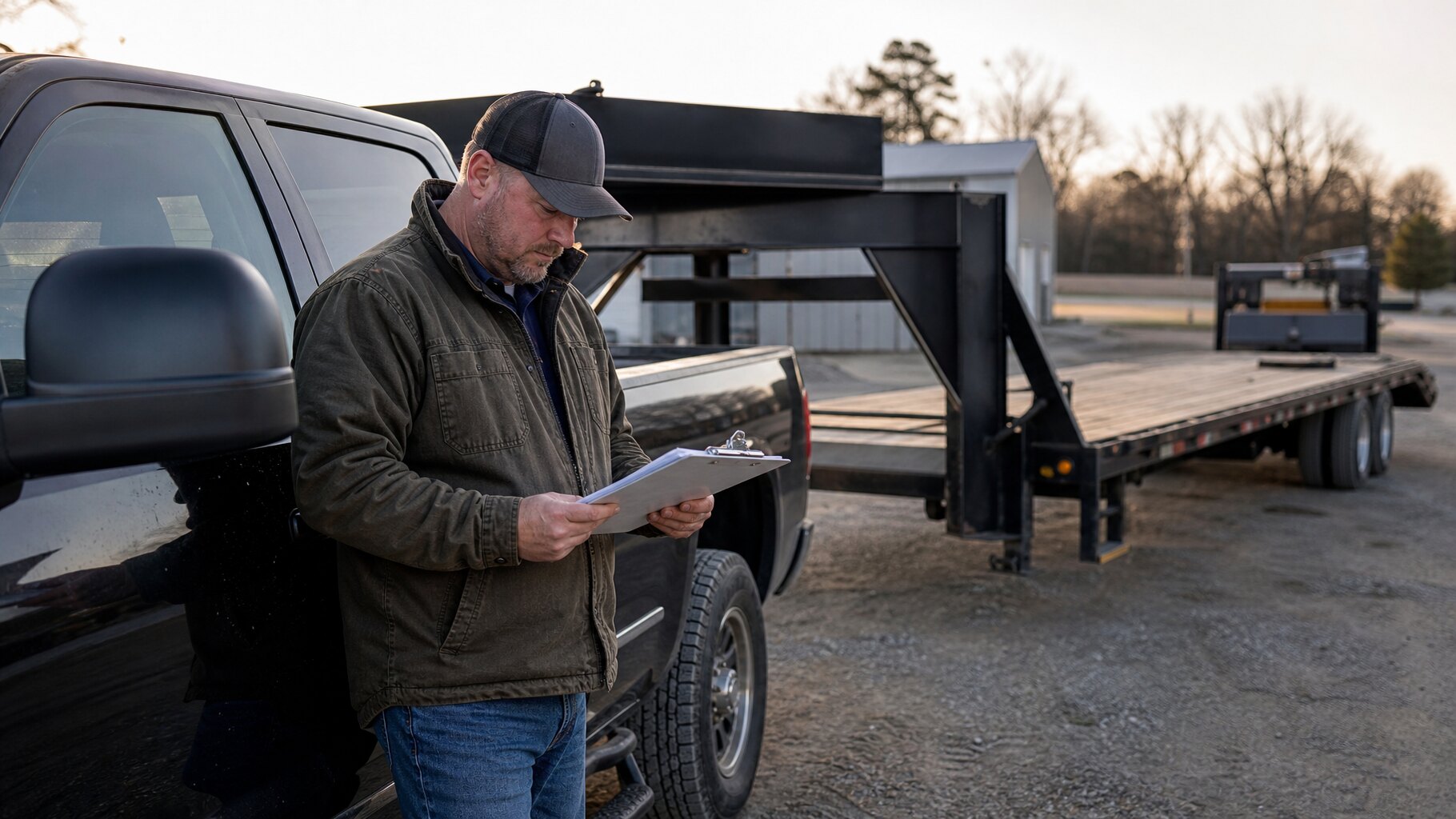
If you run one truck under your own active MC and ever cross state lines, the answer is yes. UCR applies. Short answer: there is no small-fleet exemption, no owner-operator carve-out, and no waiver for “I only run a few interstate loads a year.” The Tier 1 fee (~$59 for 2026) is the lowest the system goes, and skipping it is one of the cheapest mistakes that turns into one of the most expensive citations on a roadside.
When UCR applies to a one-truck operation (and when it doesn’t)
| Situation | UCR for current calendar year |
|---|---|
| Own MC, interstate operation (even occasional) | Required |
| Own MC, intrastate only | Not required |
| Leased to a carrier under their MC | Carrier files for the fleet, not you |
| Own MC + sub-hauling under another carrier sometimes | Required (for your own MC) |
| MC is pending / not yet active | Not required until activation; required the year of activation |
The lease confusion is the biggest one. If you mostly run under another carrier’s MC but you also have your own active authority, your individual UCR is required for that calendar year, regardless of how few miles you actually run under your own MC. The trigger is active interstate authority, not miles operated.
When in the year UCR has to be paid
UCR runs on a calendar year. Three timing scenarios for a single-truck operator:
- Year you activate your MC: UCR is required before your first interstate trip under your own authority. There is no grace period.
- Each subsequent year: Registration window opens October 1 and closes December 31 of the prior year. Filing in October vs December does not matter; both register you for the upcoming year.
- You missed last year: You can still file retroactively through the portal. Filing it now does not erase past exposure, but it stops the meter on future stops.
There is no decal, no sticker, no quarterly cycle, no monthly billing. One filing per calendar year through your home state’s portal. The official UCR Plan portal is the system of record if your home state does not host its own.
What happens if you skip UCR with one truck
The fee is small. The penalty cascade is not.
Roadside citations stack across states. Per-state penalties typically run $100-$500 on the first stop, escalating in some states. A truck pulled over in three states without UCR can rack up $300-$1,500 across that single trip. The state-by-state amounts are listed on the UCR Plan enforcement page.
Out-of-service action stops the truck, and you with it. If you are the only driver, an out-of-service action at a weigh station is direct lost revenue per stopped hour, not just a delivery delay. Most single-truck operators cannot absorb a 4-8 hour stop.
IRP plate renewal can get blocked. Several base states will not renew IRP apportioned plates if UCR is unpaid. For an owner-operator, plates not renewed = legal interstate operation blocked entirely.
Broker and insurance vetting picks it up. Some brokers and underwriters check UCR status as part of carrier vetting. Chronic non-compliance signals bigger gaps, which can affect rates, load access, and renewal premiums.
The math: 2026 Tier 1 fee is ~$59. A single roadside citation typically runs $250-$1,500. Skipping UCR to save the fee is the highest-cost tradeoff in the entire compliance stack.
Common single-truck UCR mistakes
- Assuming “small operator” means UCR does not apply. No size exemption exists. One truck under MC authority = full UCR requirement.
- Believing UCR is rolled into the MC application or BOC-3. It is not. UCR is its own annual filing through your home state, separate from any FMCSA fee.
- Mixing UCR with USDOT registration. USDOT is one-time (with biennial MCS-150 update). UCR is annual. Different cycles, different agencies.
- Filing through the wrong state. Home state for UCR = where the truck is principally based, not necessarily where the driver lives.
- Letting the lease arrangement obscure ownership. If you ever run under your own MC, even occasionally, UCR is required for that calendar year.
Quick answer recap
Single truck + own active MC + any interstate operation = UCR required, every calendar year. Tier 1 fee (~$59 for 2026), filed through home state portal in 10-15 minutes. October-December window for next year, current year owed before first interstate trip under newly activated MC. No size exemption. Just activated your MC? See do I need UCR after MC approval.
If your answer is “yes, I need UCR” and you now need the portal-by-portal mechanics, the step-by-step UCR registration walkthrough walks through the exact filing.
Next step
If UCR is the kind of small annual filing that gets pushed aside while you are focused on running loads, that is the gap that turns into out-of-service the first time a state inspector verifies it. We handle UCR registration every year on the calendar so the smallest fee in your compliance stack does not become the largest enforcement headache. See how our UCR registration service handles annual filings →