U.S. interstate carriers, owner-operators, and small fleets.
Who this checklist is for
If you:
- operate commercial motor vehicles (CMVs) over 10,001 lb GVWR in interstate commerce
- or run for-hire trucking with a USDOT/MC number
…this checklist applies to you. It focuses on federal rules plus the most common state programs that can stop your trucks if you miss a date.
1. Registrations & Annual Credentials
1.1 Unified Carrier Registration (UCR) – 2026
Who needs it
- For-hire and private interstate carriers, brokers, and freight forwarders that must register with FMCSA.
2026 facts
- The 2026 UCR registration portal opened October 1, 2025. UCR
- Carriers are expected to file by December 31, 2025 for the 2026 year; enforcement begins in early 2026. DOT Compliance
Checklist
- Confirm you are subject to UCR (interstate, USDOT/MC, or broker).
- Count vehicles correctly for your fee bracket (owned + leased CMVs).
- File 2026 UCR and keep the receipt in your office and electronically.
1.2 IFTA License & Decals – 2026
Who needs it
- Carriers running qualified CMVs (26,000+ lb GVWR or 3+ axles) in two or more IFTA member jurisdictions.
Key dates
- IFTA licenses and decals expire December 31 each year.
- Most jurisdictions require renewal by December 31 for the following year, but there is a two-month grace period (January–February) in which current or prior-year credentials are honored if the account is in good standing.
Checklist
- Renew your IFTA license for 2026 and pay decal fees before December 31, 2025.
- Order enough decal sets for every qualified vehicle.
- Make sure all prior IFTA returns and taxes are filed and paid; many states block renewal if you owe anything.
- Place 2026 decals on both sides of each power unit before March 1, 2026 (or earlier if your state requires).
1.3 IRP Apportioned Registration
Who needs it
- Power units over 26,000 lb GVWR or with 3+ axles traveling in two or more IRP member jurisdictions.
Key points
- IRP is annual; renewal month depends on your base jurisdiction (for example, New York requires IRP renewal by a set month shown on your cab cards).
Checklist
- Check your cab card for the expiration month and note your 2026 renewal window.
- Confirm your distance records (miles per jurisdiction for at least the past 12 months) are complete and auditable.
- Renew apportioned plates on time; keep current cab cards in every vehicle.
1.4 Heavy Vehicle Use Tax – Form 2290 (HVUT)
Who needs it
- Vehicles 55,000 lb or more taxable gross weight operating on public highways.
Key facts
- Tax period: July 1 – June 30 each year; due by the last day of the month after the vehicle is first used in that period.
- Stamped Schedule 1 is required to renew plates.
Checklist
- File Form 2290 for all taxable vehicles for the current tax year.
- Keep stamped Schedule 1 copies in your registration files.
- For new trucks placed into service late 2025 or in 2026, diarize their individual 2290 due dates.
2. FMCSA Registration, Authority & MCS-150
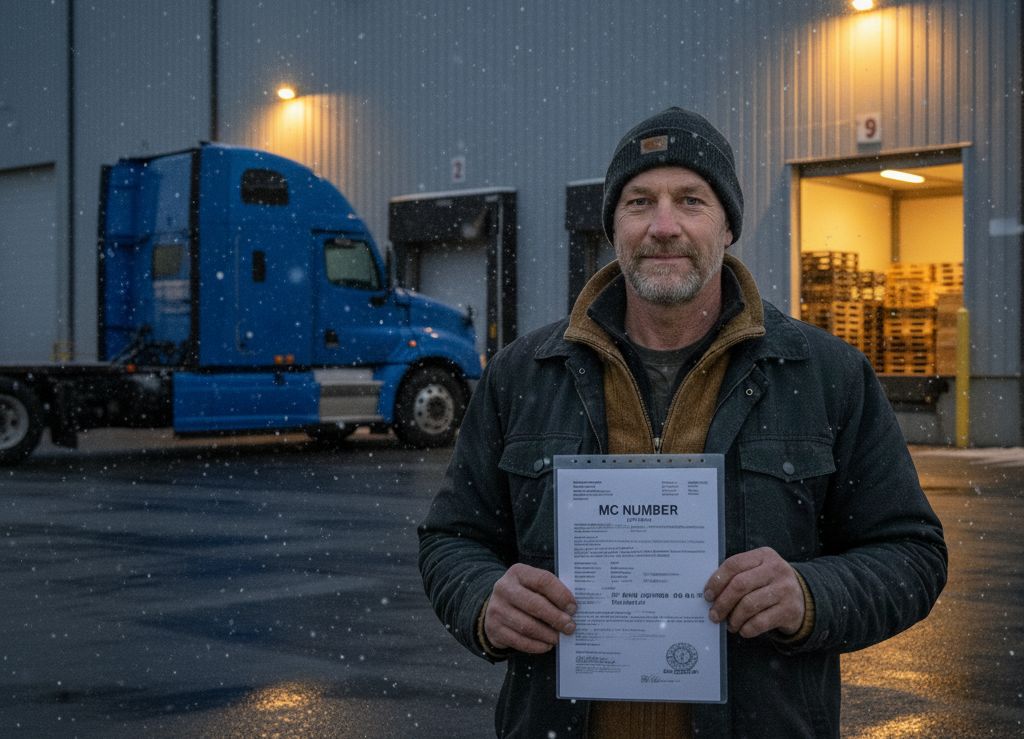
2.1 USDOT & MC Number Status
Checklist
- Verify your USDOT number is Active in SAFER.
- Confirm your operating authority (MC) is not revoked and has current insurance filings (BMC-91X) and BOC-3.
2.2 MCS-150 Biennial Update
Rule
- All entities under FMCSA jurisdiction must update their information at least every two years, even if nothing changed.
How due dates work
Industry guidance aligns with FMCSA rules:
- Second-to-last digit of USDOT → odd = file in odd-numbered years; even = file in even-numbered years.
- Last digit of USDOT → filing month (1 = January … 0 = October).
Checklist
- Look up your USDOT number and decode your due year/month.
- If your due year is 2026, schedule the update at least 30 days before the due month.
- File the MCS-150 online and keep proof of submission; failure can lead to USDOT deactivation.
3. Driver Qualification & Drug/Alcohol Compliance

3.1 Driver Qualification Files (DQ Files)
Each CDL or non-CDL CMV driver covered by FMCSA rules must have a DQ file that includes, at minimum:
- Driver application, MVRs, employment verifications
- Road test or equivalent certificate
- Medical examiner’s certificate and national registry ME info
- Annual review of driving record and driver’s list of violations
Checklist
- Set up DQ files for every active driver.
- Run and document annual MVR checks and reviews.
- Remove drivers from safety-sensitive duty if their medical card lapses.
3.2 Drug & Alcohol Clearinghouse – 2026
Core requirements
- Employers of CDL drivers must query the FMCSA Drug & Alcohol Clearinghouse at least once every 12 months for each driver.
- Limited queries satisfy the annual requirement; full queries are required before using a driver in safety-sensitive functions and when a limited query shows a record.
Checklist
- Register your company and designated consortium/TPA in the Clearinghouse.
- Ensure all CDL drivers are registered so they can give electronic consent.
- Run a pre-employment full query on every new hire before dispatch.
- Run at least one limited query per driver every 12 months and log the completion date.
- Report positive tests, refusals, and return-to-duty completions as required.
3.3 Random Drug & Alcohol Testing
Minimum FMCSA random rates for 2025 (still in force unless FMCSA changes them for 2026):
- Drugs: 50% of average number of CDL drivers
- Alcohol: 10% of average number of CDL drivers
These are minimum annual rates; your random pool must generate at least this many tests per calendar year.
Checklist
- Maintain a written DOT drug & alcohol policy covering Parts 40 and 382.
- Enroll all CDL drivers in a compliant random pool.
- Track selections and completed tests to hit the 50%/10% targets by December 31.
- Document all refusals and follow-up testing plans.
4. Hours of Service, ELDs & Daily Operations
4.1 ELD Compliance
Checklist
- Use only ELDs that appear on FMCSA’s registered ELD list.
- Train drivers on log entries, edits, and malfunction procedures.
- Keep ELD user manuals and data transfer instructions in each truck.
4.2 Hours-of-Service (HOS) Rules
Key federal limits for most property carriers:
- 11-hour driving limit after 10 hours off-duty
- 14-hour on-duty window
- 30-minute break after 8 hours of driving
- 60/70-hour limit over 7/8 days, with 34-hour restart option
Checklist
- Monitor HOS violations via ELD reports.
- Coach repeat violators; discipline when needed.
- Keep at least 6 months of RODS/ELD data and required supporting documents.
5. Vehicle Inspection, Maintenance & Safety Equipment
5.1 Daily Inspections (DVIR)
Checklist
- Require documented pre-trip and post-trip inspections.
- Repair and sign off any reported safety defects before the next dispatch.
- Keep DVIRs for the required retention period.
5.2 Preventive Maintenance & Annual Inspections
Checklist
- Maintain a written PM schedule by miles, hours, or time.
- Record all repairs and inspections by unit number and date.
- Ensure each CMV has a current annual DOT inspection report.
5.3 Safety Equipment
Each power unit should have:
- Properly rated fire extinguisher
- Three reflective triangles or flares
- Spare fuses (if required)
- Readable DOT-approved tires and lights
6. Safety Scores, Roadside Inspections & Audit Readiness
6.1 Monitor Safety Scores
Checklist
- Review your SMS/BASIC scores monthly using the FMCSA portal.
- Pay special attention to HOS, Vehicle Maintenance, and Controlled Substances/Alcohol BASICs.
- Address patterns from roadside inspections (e.g., lighting, brakes, log issues).
6.2 Be Ready for a DOT Audit
Keep these files organized and ready to produce:
- DQ files and driver lists
- Drug & alcohol program records and Clearinghouse query logs
- HOS/ELD records and supporting documents
- Maintenance and inspection files
- Accident register and insurance documents
- UCR, IFTA, IRP, 2290, and permit proof
7. State-Level Permits & Taxes
Requirements vary, but many interstate carriers also need:
- Highway use / weight-distance taxes (e.g., NY HUT, KYU, NM, OR)
- Oversize/overweight annual permits if running specialized equipment
- Extra state registrations for intrastate hauling
Checklist
- List the states where your trucks regularly operate.
- Confirm each state’s HUT/weight-distance registration and filing schedule.
- Track the expiration dates for any annual oversize/overweight permits.
8. 2026 Compliance Calendar – Quick View
Use this as a working schedule for the year.
Every Year
- By Dec 31 (preceding year):
- Renew UCR for the upcoming year (2026 window Oct 1–Dec 31, 2025).
- Renew IFTA license and decals.
- Jan–Feb:
- Use IFTA grace period while waiting for 2026 decals, if your account is in good standing.
- Confirm 50%/10% random testing targets and reset your random pool.
- Quarterly:
- File IFTA returns.
- Review SMS/BASIC scores and top roadside violations.
- Annually (by company policy date):
- Run annual Clearinghouse queries for each CDL driver.
- Perform annual DOT inspections for all CMVs.
- Conduct annual driver record and performance reviews.
- Every 24 months (per your USDOT digits):
- File MCS-150 biennial update in your assigned month.
9. How to Use This Checklist
- Turn this list into a simple one-page tracker: columns for task, due date, responsible person, and status.
- Tie each task to a calendar reminder 30–60 days before it’s due.
- If you’re short on staff, outsource high-risk items first: UCR, IFTA/IRP, drug & alcohol program, and MCS-150. Missing these can get your trucks parked immediately.